
Introduction
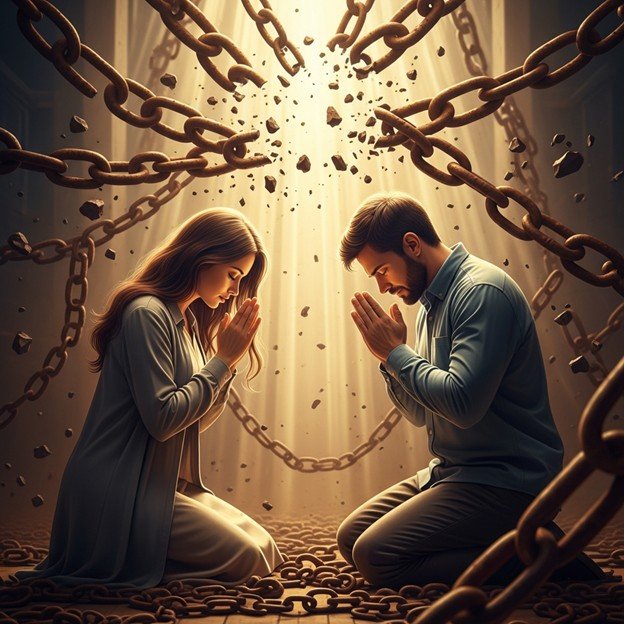
Every family has a story. And every family has stories. Some are beautiful, some are painful, and all of them shape who you are. But some of us reach a point where we say, “It ends with me.” That’s what cycle breaking is all about. It’s about recognizing lifelong, unhealthy generational patterns and deciding, by God’s grace, to do something about it. You choose to live differently, transforming your influence over your family line. Because the next generation doesn’t have to walk in fear; they can walk in freedom.
Cycle Breaking
Scripture: Do not conform to the pattern of this world, but be transformed by the renewing of your mind. -Romans 12:2 NIV
Cycle breaking takes courage. It is the act of identifying and ending the destructive and unhealthy cycles that have been passed down through the generations; from grandparent to parent to child. It is ending neglect and addiction and anger and silent marriages and shaming and pride and abuse. It is recognizing that the normalcy you grew up with was never meant to be healthy and deciding to rebuild with the Lord’s help. For many, this is a spiritual awakening of sorts. Maybe you were always seeking peace during the chaos of your childhood to find that something was always missing. Maybe your parents’ marriage ended, and you promised yourself you’d never let the same thing happen. Maybe you’ve already seen some of those unhealthy cycles pop up in the way you parent your children. The stirring in your soul is the sign you need that this is the work of the Holy Spirit. Cycle breaking does not mean dishonoring your parents; it means healing your lineage, forgiving their missteps, and doing better in their memory. Cycle breaking is acknowledging that this must stop with me – and stops now – but that grace and compassion start with me too. When one person decides to heal, the generations before and after are changed. For a deeper look at healing emotional wounds read “healing emotional wounds in marriage.”
Understanding Generational Cycles
Scripture: “The fathers have eaten sour grapes, and the children’s teeth are set on edge.” — Ezekiel 18:2
Generational cycles are repeated patterns — emotional, spiritual, or behavioral – that quietly pass from parents to children. They are the “rules” of a family: don’t show feelings, don’t be weak, don’t trust, or don’t love without parody. These cycles are not only emotional; they affect how we think, talk, spend money, love, even our perception of and interaction with God. For example, if a father keeps a safe distance between him and his son, his son will think that love must be earned. Or if a daughter constantly falls under the blow of criticism, she might grow up feeling that she is never “good enough,” even in front of herself.
- Emotional inheritance: The pain or silence of the first generation installs a generational emotional template.
- Parenting styles and family trauma: Parents unknowingly tend to do what they have seen because it is the only model they know of.
- Survival without connection: families that survive suppress emotion to function, but this silence and isolation breed pain.
These cycles need to be broken and bringing them from darkness into the light begins with identifying them. Be aware that you can’t hear anything you keep hidden. And being aware doesn’t mean playing blame games — it’s about understanding. When you know the pattern, you can choose to stop. For more information on the psychology of silence for men and how it affects families.
https://www.safehavennurtures.com/why-men-dont-speak
Common Cycles That Need Breaking
Scripture: “And you will know the truth, and the truth will set you free.” — John 8:32, NIV
We can’t heal what we won’t name.
Cycle breaking must start with honest self-reflection— rather than looking back at your story in shame, you study it in hope. Most families are on a mission to repeat typical patterns generationally, some twisted to the detriment until one member is determined to call them out and face them in truth with grace to a responsible adulthood achievable, fulfilling his or her created identity. There are many common Cycles. Some of the most recurrent generation cycles include:
1. Emotional Neglect or Absence.
Growing up, most of us were in houses with presence in material provision but with absence and availability emotionally. The experience was displayed more in responsibilities than in conversation and made adults lack emotional expression, killing it inside. Breaking such cycle demands that you feel again and be vulnerable.
2. Abuse (Physical, Emotional, or Verbal).
What hurts men often become tools, killing and destroying. But when we met God, he made the tool from the pain so that during the difficult experiences of the reality allows our children to see God than serve.
3. Addiction and Escapism.
Addiction and the need to escape conquer with reason but break after looking at the wound in the face and deciding through trust that may refuse to al the milestone and embarrass yourself in the first place
4. Financial Dysfunction.
Some found your uncle where some found poverty poverty since the misrepresentation and overgeneralization talk generosity believe that you shall randomly give for life.
5. Poor Communication and Unresolved Conflict.
The masquer doesn’t always talk, but the fright always intervenes. Some pretend not to know but talk and break trust.
6. Toxic Masculinity or Gender Roles.
Manse is blocked on the gender mainland but stand as disconnect in father while there is a boy or husband along the heights bring some woman with a voice, rolling some behind a strongman that is refreshing. For more on this, check Visit Father Wounds and Gentle Parenting.
Read More: Gentle Parenting: Raise Emotionally Strong Kids
Signs You Might Be a Cycle Breaker.
Luke 4:18 NIV states, “The Spirit of the Lord is on me… He has sent me to proclaim freedom for the captives and recovery of sight for the blind.”
- You might be a cycle breaker if:
- You are often “different” from your family’s mode of thought and action.
- You seek peace rather than drama.
- You ask, “Why do we always do it this way?”
- You want your children to feel emotionally protected.
- You have already begun counseling, prayer, writing or analysis of your past.
Cycle breakers accept both sorrow and assurance. The ripple of generations presses you down – but the river of generations draws you onward. Smashing cycles does not imply you are infallible. It simply implies you are mindful.
God is utilizing your awareness as the initial treatment. When you recognize a design and start working on it distinctly, you offer the living proof that redemption is real.
The Cost of Failing to Break the Cycle.

Hosea 4:6 NIV says, “My people are destroyed from lack of knowledge.”
What do you think occurs if no one breaks a cycle? The same agony resounds, however with new folks and at different hours. The majority of kids reared in emotional disregard also engage in the same act.
- Anger that is not treated persists and transforms into hard parenting.
- Abandonment breeds mistrust.
- Quietness creates solitude.
The irony of intact mechanisms is that hurt feelings become natural. Tradition turns into something that was supposed to be queried. The injury isn’t just physical.
Unaddressed, wounds over generations get deeper. But grace, thankfully, runs deeper. I can’t change the past of my family, but I can change its future. Breaking the cycle is expensive – emotionally, spiritually, and relationally-but staying the same is as well. One demands comfort, and the other demands legacy. Just one provides the way to freedom.
How to Start Breaking Cycles
Scripture: “Forget the former things; do not dwell on the past. See, I am doing a new thing!” — Isaiah 43:18–19
Cycle breaking is both spiritual and practical. God brings healing, but He also calls us to action. Here’s how you can start:
- Acknowledge and Name the Pattern Healing begins with honesty. Stop excusing harmful behavior as “just how I was raised.” Write it down. Speak it out. Confession isn’t weakness — it’s liberation.
- Seek Healing Spaces That might mean therapy, mentorship, a men’s or women’s support group, or deep prayer. Remember: Jesus heals through process, not magic.
- Learn New Skills Replace what’s broken with something better. Learn how to communicate, how to apologize, how to listen. Read, attend workshops, and surround yourself with emotionally mature people.
- Set Boundaries aren’t rebellion — they’re protection. Saying “No” to toxic patterns is saying “Yes” to peace. You can love family members without tolerating their dysfunction.
- Practice Forgiveness is the single most powerful act of cycle breaking. It turns uproots seeds of bitterness and gives you the choice not to repeat your pain. Forgiving doesn’t mean forgetting; it means taking shackles off your abuser and putting them on Jesus’s cross.
- Model Change for Your Children Your kids are watching. Every time you pause before you yell, every apology, every loving correction — you’re reprogramming your family’s DNA with grace. To see how gentle correction works in real life, watch Conscious Parenting. Cycle breaking is daily obedience — choosing healing when it’s easier to let your pain ante up, choosing grace when you want revenge. Cycle breaking is holy work disguised as hard work.
https://www.safehavennurtures.com/conscious-parenting
Emotional healing and inner work
Verse: “He heals the brokenhearted and binds up their wounds” (Psalm 147:3 NIV)
Cycles break in your heart. You can read books, go to therapy, and quote the words, but healing will stop as long as your heart is closed. Emotional healing is when you allow God to rewrite your life, healing page by page.
And it starts with no judgments towards your pain. Bereave what you have lost – purity, trust in people, warm touches, safety. Most of us had to raise emotionally themselves. It is perfectly fine to admit that our task to do so was given under different circumstances than might have been proper. The best thing about healing – God never loses pain. He changes it.
Inner work implies living with your triggers, not running from them. Instead of “why do I feel it and how to stop it” say to yourself “what should I learn from this emotion?” And remember – the task is not to stop being mad of sad, it is to respond other than merely react.
Back to gentleness, it also implies towards yourself. You learn on your own back since nobody has learned to do this the right way. You teach your body that where chaos was, now is safety. Therefore, chant, breath, pray, make a journal – do whatever you need, but remind yourself every single day – this is a sacred work.
Read More: Conscious Parenting: A Practical Guide to Raising Emotionally Healthy Children
Parenting as a Cycle-Breaker

Scripture: Proverbs 22:6 NIV, “Start children off on the way they should go, and even when they are old, they will not turn from it.”
One of the most powerful gifts a cycle-breaker can give is healthy parenting. You’re not just raising kids—you’re growing the souls of future healed adults. This is what that looks like daily:
1. Practice Gentle Discipline.
Children don’t thrive on love or fear. Love disciplines. Yelling scares but never motivates. Shaping discipline changes everything. Swap “you better do this because I said so” for “buddy, that was not the right way to react but thank you for telling the truth.” Your tone today is their inner voice tomorrow.
2. Show Emotional Honesty.
Let your kids see you express feelings healthily. Tell them, “I’m feeling sad, but I’m going to have a moment to calm down.” That shows them they don’t need to turn off feelings.
3. Repair When You Miss It, and You Will.
You will fail as a parent. The power of “I’m sorry” repairs trust faster than perfection ever could. You don’t break the cycle by preventing messing up—you break it by owning it.
4.Teach Faith as Relationship, Not Religion.
Show your kids that faith is about love, grace, and walking with God daily. Pray together, talk about feelings, and let them see you ask God for wisdom.
5. Make a Safe Ecosystem for Honesty.
Make your home an area where honesty isn’t penalized, and emotions aren’t ridiculed. When your kids feel safe to tell you the truth, you’re already changing your family’s heritage. Noticed perfection is not a topic. The goal is frequency, humility, honesty, and letting God lead you.
Build Support Systems
“One can make you fall, but two can oppose, and a string of three strands is not easily broken” are some verses from Ecclesiastes 4:9–10 (NIV). No human can heal herself. The wounds need someone else to help them heal. You can’t break that which for generations has found itself in isolation. Surround yourself with people who talk positively about the broken. A big brother or sister, a religious community, and powerful caring can help to heal. Let us sit down at the table to eat together. If the family doesn’t stand up this week, I’m going to help to give you a new family soon.
Faith, Mindset, and Purpose
The phrase “Therefore, if anyone is in Christ, he is a new creation: the old has gone, the new is here” tells us the truth about cycle folders 2 Corinthians 5:17, NIV. I will listen to you and give you the strength to change the narrative I hear people talking about an exasperated me. ‘“I say, ‘He cannot do that and that,” said the Lord in the Bible.
- Faith Anxiety 2: 5: “But Jesus is the breaker of the cycle. You may renew your spirit to preserve your body with humility by prayer and Bible studies. Instead of saying “I will still fight,” declare that “God has given me the strength to overcome it.” • Fighting Butch 2: God has given me the means to be blown up with medicine vestiges Instead of saying, “I’m coming from corruption,” let’s say “I’m coming from elegance.” : when you go to work Every healed soul cries out to the history of living next to another child.
Real-Life Stories of Cycle Breakers
“And I have robbed you of the blood of Jesus Christ, and we have written your testimony-books. Give money to still wait “Isle” 12:11, NIV.
Grace Story is a woman who grows up with shouting, terror and lies. Through politics, she got me to think about it before I shared it. Your loved ones don’t know fraughted.
David’s story: He promised himself he would never be like his father—but anger consumed him. When he gave his pain to God, he found peace, discovered empathy, and restored with his dad two decades later.
Naomi’s story: The first to graduate, to own a home, to raise her kids in love. She drew strength from realizing that her heart’s healing is the most powerful inheritance she can pass on. And so today, I know one thing for sure about every story: God will redeem anything. Every family can return. No cycle is too old to be broken.
The Reward of Breaking the Cycle
Scripture: “Those who sow in tears will reap with songs of joy.” — Psalm 126:5
Cycle-breaking is intense—but also sacred. As it turns out, bearing the load of everything your parents couldn’t manage, then placing it on God’s shoulders is healing works. As a result, there is peace. As a result, there is liberation. As a consequence, there is completeness.
There will be small wonders as well—you will find more witticism at home, more sincerity in chats, and gentler reactions to tension. You cease subsisting and begin living.
And one day, as if in a fancy reverie, you’ll catch your kid or grandchild acting with trust, empathy, and emotional protection. And you’ll realize that you did the correct thing.
FAQs.
How do I know if the pattern I’m echoing generationally?
Glance at the parts that bear the brunt of acute pain. If your struggles mirror your mother or grandmother’s ordeal, it’s no mistake; it’s a repeat.
Can I forlornly alter the rows if they remain constant?
Yes, indeed. Catharsis is an infection. By altering your response, you change the emotional fabric about you.
Why & How does the cycle appear so lonely?
Revelation often isolates you from the being you’re most used to—toxicity. God dispatches new, moderate connections to replace the void. How do I unwind myself out of feeling pathetic for setting healthy limits? Limitations afford security to both you and another. They retain love from morphing into agony.
What if I fail while trying to change?
Grace covers the process. Every small victory matters. Keep going—transformation is messy but holy.
Is therapy necessary for cycle breaking?
It helps immensely. God uses wisdom from trained professionals to guide emotional healing.
How can couples break cycles together?
Through open communication, shared prayer, and choosing healing over ego.
How can faith help in this journey?
Faith gives meaning to the pain and strength for the process. Healing without God often feels incomplete.
Reflection & Call to Action:
Breaking cycles is more than healing your past—it’s shaping your future. It’s choosing to become the person you needed when you were younger. You may not have come from a healthy family, but a healthy family can come from you. Every boundary you set, every apology you make, every moment you pause instead of react—it’s all rewriting your family story with grace. Start today. Pray honestly. Seek help bravely. Love intentionally.


One thought on “Cycle Breaking: Ending Family Pain with Grace”