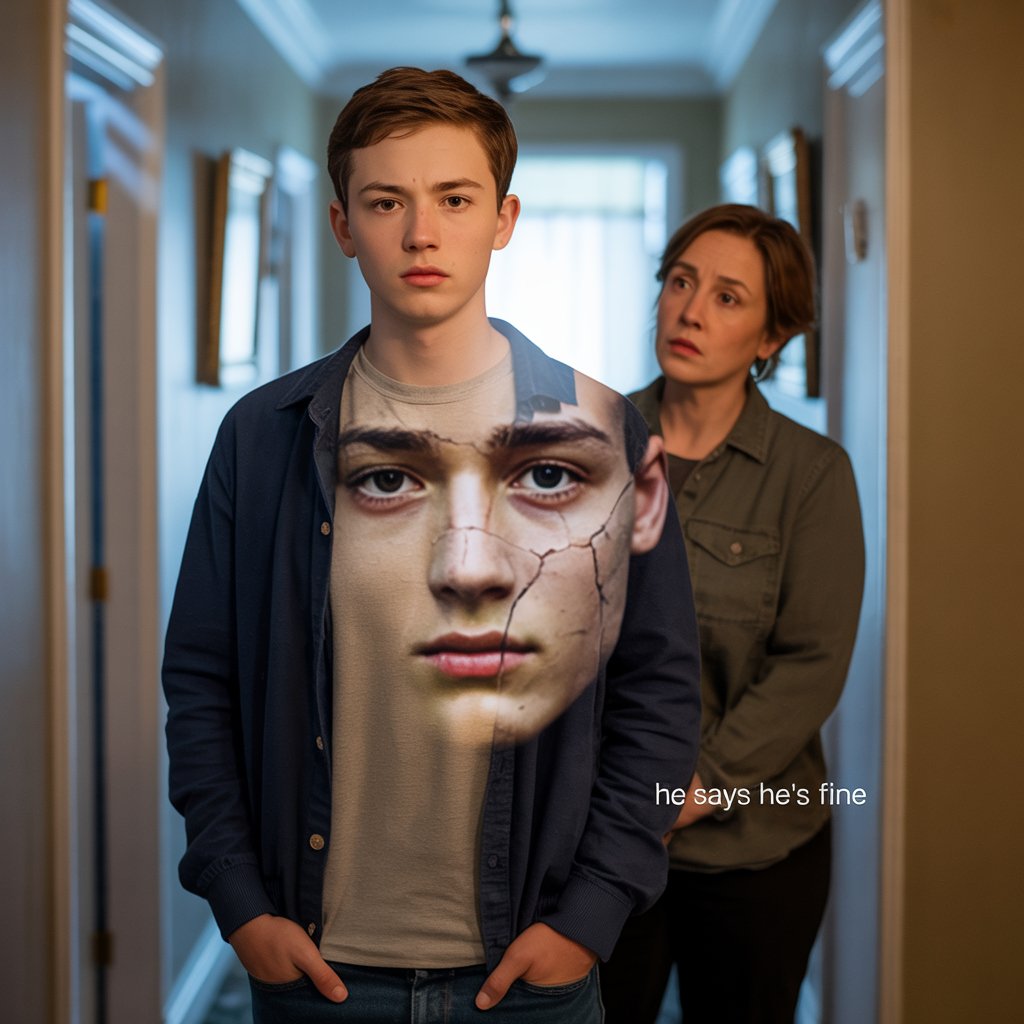
If you’ve ever looked at your child and wondered, “Why do they behave this way? Where did they learn that?” — you’re not alone. Every parent reaches that moment.
And the answer is rarely simple.
Children don’t grow in isolation. They are being shaped every day by three powerful forces:
- The family they grow up in
- The school they spend most of their day in
- The community and peer world they interact with
Together, these three environments create the “psychosocial climate” that forms your child’s personality, behavior, values, resilience, confidence, and future choices.
This isn’t just psychology jargon — it’s everyday life.
Your child becomes a blend of the voices, expectations, beliefs, routines, conflicts, relationships, and pressures that surround them.
And whether you realize it or not, all three systems are constantly communicating with each other. When one fails, another can either support or damage your child further.
This blog breaks down how these systems shape your child — and what YOU, as a parent, can start doing today to strengthen your family and guide your young person with confidence.
1. Family — The First Classroom, First Mirror, First Safe Haven

Every child begins life inside a family system. And that system becomes their emotional foundation — the good, the painful, the confusing, and everything in between.
Read More: Cycle Breaking: Ending Family Pain with Grace
Why Family Matters So Much
Research across decades says the same thing:
Warmth + communication + involvement = emotionally strong children.
Conflict + inconsistency + emotional distance = wounded, anxious, or withdrawn children.
Your home doesn’t have to be perfect. Kids don’t need perfect parents. What they need is:
- consistency
- emotional presence
- healthy boundaries
- affection
- safety to speak
- parents who repair mistakes
Children watching their parents navigate emotions become better at managing their own. Kids raised around constant shouting learn to shout. Kids raised with shame learn to hide. Kids raised with love and clear expectations grow up with confidence.
What family teaches a child (without saying a word)
- How to love
- How to fight
- How to apologize
- How to express anger
- How to ask for help
- How to treat authority
- How to treat people who disappoint them
- How to trust
Your child is not studying who you say you are —
they are studying who you are when you’re tired, frustrated, disappointed, or under pressure.
That becomes their definition of adulthood.
Family SES and parental involvement
Even though money affects opportunities, research is clear:
the strongest predictor of a child’s development isn’t wealth — it’s parental involvement.
A parent who is present, emotionally available, and guiding their child has a stronger developmental impact than expensive schools or tutors.
Children thrive on connection, not luxury.
What you can start doing now
- Make home the safest emotional place
- Check in: “How are you… really?”
- Replace shouting with conversations
- Set predictable routines
- Teach consequences without shaming
- Share responsibilities
- Be honest about your own feelings
- Let them see you model self-control
- Repair after conflict (“I’m sorry. Let’s do better.”)
These simple habits change a child’s emotional world.
2. School — The Social Laboratory Where Identity Is Built

After home, school becomes the biggest shaper of your child’s world. It’s where they:
- learn to cooperate
- handle pressure
- make friends
- experience failure
- build confidence
- experiment with identity
For many kids, school becomes the place where they feel seen — or unseen.
Teachers matter more than we admit
A supportive teacher can strengthen:
- self-esteem
- academic motivation
- emotional regulation
- resilience
A dismissive or harsh teacher can damage the same areas.
The teacher-student relationship often becomes the second-most influential relationship after parents.
Peers become powerful — especially in adolescence
By adolescence, peer influence skyrockets. Teens become more sensitive to:
- approval
- belonging
- social status
- rejection
This is why your teen may suddenly look, talk, dress, and behave differently.
They’re not “changing for no reason.”
They’re adapting to survive socially.
If family is weak, peers fill the gap.
If family is strong, peers complement, not control.
School as a corrective environment
Kids from chaotic homes sometimes find:
- stability
- routine
- positive adult relationships
- structure
- encouragement
- clarity
- belonging
inside school.
Many children say school feels safer than home — emotionally, socially, or psychologically.
This is why collaboration between parents and schools is so powerful.
Read More: Understanding Gen Z: What Parents of Young Adults Need to Know
What you can do as a parent
- Know your child’s teachers
- Attend school events
- Ask about their friendships
- Support their learning environment
- Don’t shame them for struggles
- Encourage mistakes as learning
- Celebrate progress, not just grades
3. Community — The Invisible Hands Guiding Your Child’s Mindset and Values

Your child’s community shapes their sense of:
- belonging
- identity
- cultural values
- safety
- possibility
- hope
- social expectations
A supportive community creates better outcomes. A hostile or chaotic one creates pressure, fear, and stress.
The community teaches your child:
- “What people like us do”
- “What success looks like”
- “How to treat others”
- “Who deserves respect”
- “What dreams are realistic”
- “What to be afraid of”
Exposure to role models — coaches, pastors, mentors, neighbors, relatives — all play a massive role.
Community programs are powerful
Good programs help children:
- discover talents
- build friendships
- strengthen character
- develop discipline
- learn responsibility
- gain confidence
- stay away from harmful behaviors
This is why programs like Safe Haven Nurtures, Forge Mentorship, and similar youth support systems are crucial.
They fill gaps parents can’t always cover alone.
Read More: Breaking Cycles in Marriage — Heal Together, Not Apart
4. Peer Influence — The Uncomfortable Truth Every Parent Must Face

Peers become the biggest influence by ages 13–18.
They shape:
- behavior
- self-esteem
- risk-taking
- academic motivation
- emotional expression
- relationships
A teen who falls into the wrong peer group can change drastically — fast.
But the opposite is also true:
A strong peer group can lift, protect, and inspire your child.
Your child’s peer group is often a mirror of their unmet needs
- If they feel unseen at home, they choose peers who give attention.
- If they lack boundaries at home, they choose peers without boundaries.
- If they feel unsafe at home, they choose peers who feel like family.
Your job isn’t to control their friends —
it’s to strengthen the home enough that your child picks good friends instinctively.
5. Culture and Systemic Factors — The Bigger Forces We Forget to Consider
Culture shapes:
- how we parent
- how we interpret respect
- how we show love
- how we express anger
- how we discipline
- how we define success
- what behavior we tolerate
- what behavior we punish
Sometimes, what you see as “misbehavior” is actually your child wrestling with two or more cultural expectations:
- What they see at home
- What they see at school
- What they see online
- What they see among peers
We must stop saying, “This child is stubborn.”
And start asking, “What system is this child reacting to?”
Read More: The Silent Inheritance: Why Pain Runs in Families
Systemic stressors also matter:
- poverty
- violence
- family instability
- academic pressure
- gender expectations
- cultural silence around mental health
- unrealistic societal standards
These influence behavior more powerfully than most parents assume.
6. The Parent’s Real Work — Raising a Child in a Three-System World
Your child is shaped by family, school, and community.
But YOU are the only one who ties all three together.
Your job is to:
1. Create a safe emotional home
Where feelings are allowed and mistakes don’t define the child.
2. Build a strong parent–school relationship
Teachers should know you care, and your child should know you and school are a team.
3. Stay aware of their peer world
Not by spying — but by listening.
4. Give your child meaningful community
Mentors. Programs. Church. Sport. Safe Haven Nurtures events. Spaces where they grow.
5. Model the values you want to see
Children become who you are, even when they pretend not to be watching.
6. Teach emotional skills
The world harms emotionally illiterate children.
7. Address wounds early
Small wounds become silent inheritances — passed down generation to generation.
7. When One System Fails, Another Must Carry the Weight
This is why some children:
- behave well in school but struggle at home
- behave well at home but break down socially
- thrive only when with mentors
- collapse when peer pressure increases
- flourish in community programs but hide in class
Children don’t misbehave randomly.
They’re responding to the system that is either supporting them or failing them.
Your job is to help them build resilience even when one system is weak.
8. What Counseling and Support Should Look Like (Practical Guidance for Parents)
Modern counseling recognizes that children are shaped by multiple systems.
A good counselor doesn’t just ask:
“How is the child behaving?”
They ask,
“What systems are shaping this behaviour?”
Effective support includes:
- family therapy
- school collaboration
- community engagement
- cultural sensitivity
- peer assessment
- mentoring programs
- emotional skills building
- expectation alignment
When all three systems collaborate, children change faster, healthier, and more permanently.
Read More: Why Young Adults Delay Life Steps — And How Parents Can Support Them
Call to Action
If you want to raise emotionally strong, resilient, confident young people, remember this:
You don’t have to do it alone.
You were never meant to.
Families shape a child.
Schools guide them.
Communities support them.
But parents lead the vision.
Safe Haven Nurtures walks with you on that journey.
Explore our parenting guides
Join our youth mentorship community
Attend upcoming trainings and family sessions
Follow Safe Haven Nurtures for daily insights
Your child doesn’t need a perfect parent —
just a present one.