Introduction
Every parent knows the feeling — your child achieves something remarkable, earns glowing reports, or demonstrates kindness that brings tears to your eyes. Of course, you puff your chest a little bit and maybe even rave that much more. It’s never bad to celebrate your child’s wins. The issue arises when the first child’s celebrations then become a habit and the others fade away quietly in the background.
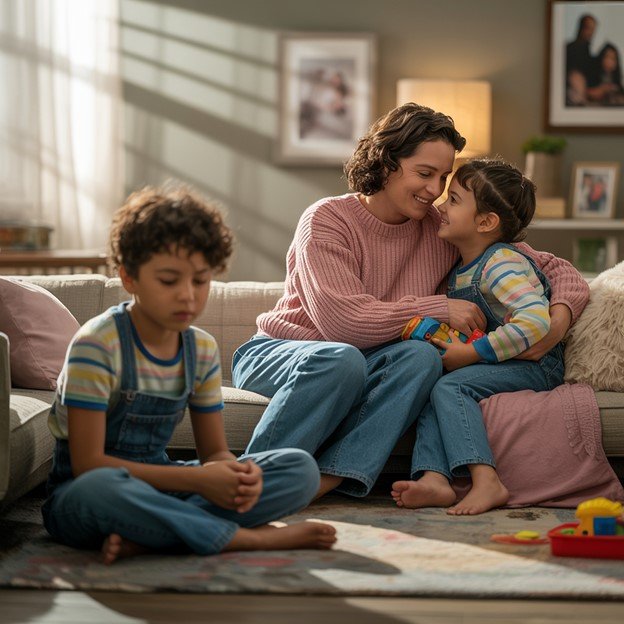
Parental favoritism is more widespread than many parents like to think. It can be subtle — such as heaping praise on the child who is less trouble. Other times, it’s more overt — favoring one child’s achievements, for example, or consistently taking one side in a conflict involving that child. The truth is: children notice. And those who feel left out don’t just “get over it.” The scars follow them into manhood.
In this post we’ll decide what favoritism is, why it occurs, how it impacts children, and most critical how to stop expecting it and raise kids with the knowledge that each are loved the same, valued the same and feel secure.
What Is Parental Favoritism?
The problem of parental favoritism occurs when, over time, one child begins to receive a disproportionate amount of the parent’s attention, love, approval or status in the family compared to the other children. It’s not necessarily that you love one child more — it often manifests as tiny but frequent tells.
Signs of favoritism include:
It’s praising one child for their achievements and ignoring everything another has done.
One child gets more quality time.
Turning a blind eye to misbehavior from a “favorite” and cracking down quickly on another.
Giving one child additional privileges (screen time, trips, presents).
Making frequent comparisons between children.
The tricky part is that favoritism is not always even intentional. Many parents unwittingly, find themselves in it. But intentions aren’t what kids measure — experiences are.
Why Parents Fall Into Favoritism
You may not consciously intend to treat your kids differently, but here’s why it often does happen:
These things include:
Performance and Achievement: Parents prefer the child who comes home with the best grades, excels in sports, or has some natural talent. One child receives recognition, while the others remain invisible.
Personality and Behavior: One child may be easier than the others-centered for whatever reason, be it obedience, quiet, or affection, so the parents struggle less with that child.
Shared Interests: fathers often find it easier to bond with their sons. If a father is a fan of football and one son shares that quality, the bonding will occur more naturally, leaving the other children scavenging for attention.
Birth order or Gender: Some parents naturally gravitate towards their oldest or the youngest or a particular gender. Although all the reasons above appear to be pretty “normal,” they often have detrimental outcomes.

Effects of Favoritism on Children
On the favored child at first sight, being the child a parent prefers might not seem like a bad thing. Often, it is not, but the implications may include: The favored child is under constant pressure to;
- maintain a ‘‘special” status. No mistake or slip-up is permissible; otherwise, they risk losing the love.
- Becoming entitled: Some of these adults grow up believing they are worth this special treatment.
- Strained sibling rivalry; As the siblings are constantly compared, most of them develop resentment for the favored one.
On the favored child, this child becomes the recipient of the younger siblings’ hostility. The damages here run even richer:
- Feeling rejected: Unloved children frequently believe that they are invisible or ‘less than.’
- Low-esteem: They grow to perceive themselves as inferior, unworthy added time, if ever.
- Sibling competition: With only finite affection, siblings vie for attention and acquire relationships.
- Mischievous conduct: They engage in anger or withdraw.
Case Example:
A mother told me about her two sons. One was quiet and polite, the other more rascally and adventurous. She was lauding the virtuous one and upbraiding the other. Years later, his daring son would confide that he always felt like “the disappointment.” That belief stayed with him throughout his life, creating challenges with confidence in work and relationships.
Read More: https://safehavennurtures.com/shielding-children-from-parental-conflict/
Long-Term Impact of Favoritism
The impact is not limited to childhood. They echo into adulthood:
Fractured Sibling Relations: The bitterness can last a lifetime, creating estranged families of parents and their children.
Adults Misinformed: Kids who felt ignored try to seek love, in the wrong way.
Authority Issues The favored and scorned children are likely to trust improperly, feeling they have to earn love or approval Somehow.
Spiritual Wounds: For families of faith, favoritism can warp a child’s understanding of God’s love, leading them to believe that maybe He, too, would “play favorites”.
How Parents Can Avoid Favoritism
The good news? You can change the story. Here are practical steps:
1. Be Self-Aware
Take a good, honest look: Are you the parent who praises one child a lot more? Do you find yourself more naturally connected to one of your children? Awareness is the first step.
2. Praise Effort, Not Just Results
Rather than, “You are so smart,” say, “I love how hard you worked on that. This evens the encouragement across strengths.
3. Time Alone with Each Child
Even 10 minutes of uninterrupted time can be a game changer. Rotate often enough that no child is left out.
4. Avoid Comparisons
Sentences such as, “Why can’t you be like your brother?” leave lasting scars. Celebrate individuality instead.
5. Show Affection Equally
Physical contact or kind words or a simple “pass” — try to sprinkle them across all the children.
6. Rotate Responsibilities and Privileges
Marked favoritism causes resentment if one child always ends up with the “fun” chores or privileges. Make it fair.
Promoting Equality and Unity in the Home
There are things you can do, beyond preventing favoritism, to actively construct unity:
- Encourage Cooperation: Siblings being in this together not against each other. You can go in for family games, mutual projects or even chores.
- Establish Family Rituals: Whether it’s Friday dinners together, movie nights, or prayers, each child knows they are part of something bigger than themselves.
- Teach Empathy: Encourage children to see and value each other’s differences.
When children see that their family is a place, they can be their true selves and ar.e loved unconditionally, they become more confident, more secure, and more empathetic.
Read More: https://safehavennurtures.com/how-to-support-your-teens-mental-health-without-pushing-them-away/
Conclusion & Call to Action
Favoritism may feel small at the time, but the effects are lifelong. The child you ignore today, may be the adult struggling with self-worth. Or that favored child may harbor crushing pressure or entitlement.
Our mission, as parents, isn’t to raise “favorites” — it’s to raise kids who all feel loved, seen, and valued.
Consider for a moment this week:
- Do your children feel equally loved? What minor adjustment might you make to mitigate the risk of alienating any of them?
- Your children don’t need perfection. They simply need to feel with certainty that your love for them is constant, equitable and unending.
A Faith Perspective
“My brothers and sisters, believers in our glorious Lord Jesus Christ must not show favoritism. – James 2:1
God doesn’t play favorites. Neither should we.